
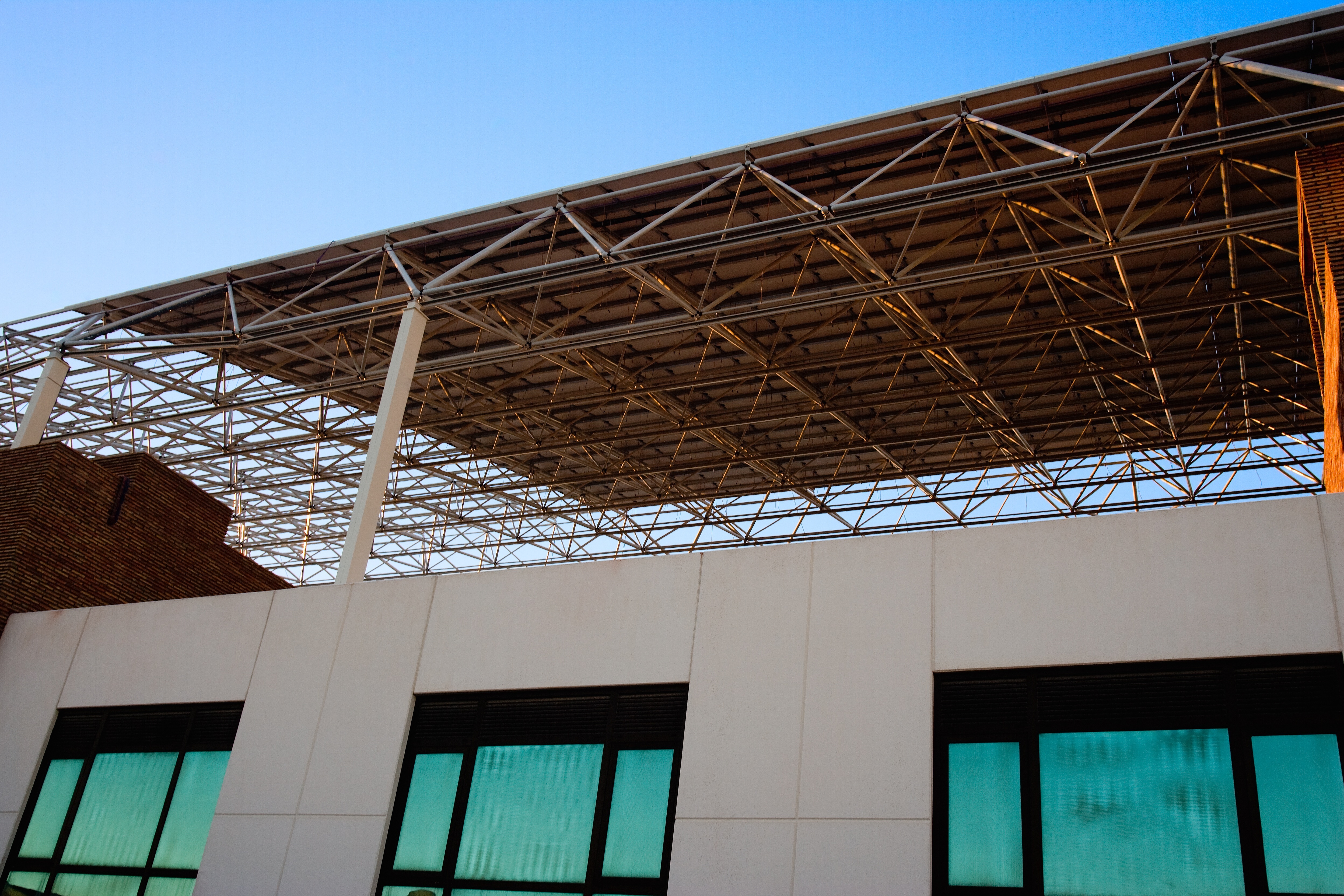
Warehouses and industrial facilities in the Dallas-Fort Worth Metroplex have an unfair advantage when it comes to solar energy. Massive flat roofs. High daytime electricity usage. And some of the most generous commercial incentives in the country.
If you operate a distribution center, manufacturing plant, cold storage facility, or logistics hub anywhere along the I-35E corridor or near Alliance Airport, you are sitting on a revenue-generating asset that your accountant probably has not noticed yet.
Why Warehouses Are Ideal for Commercial Solar Systems
Not all buildings are created equal for solar. Warehouses and industrial facilities check every box:
- Massive uninterrupted roof space: A 200,000-square-foot warehouse roof can accommodate a 1.5 to 2 MW system without creative engineering.
- Flat roofs: No complex angle calculations. Ballasted racking systems sit on top without penetrating the roof membrane, preserving warranties and reducing leak risk.
- Minimal shading: Industrial parks typically lack trees and neighboring buildings that block sun exposure.
- High daytime load alignment: Conveyors, HVAC, refrigeration, and lighting run during the same hours the sun is strongest. That means maximum self-consumption and minimal reliance on net metering credits.
For commercial solar installation companies, warehouses are the easiest commercial projects to design and the fastest to pay back.
The DFW Logistics Corridor: Location Advantage
North Texas is one of the busiest logistics hubs in the United States. The area around DFW Airport, Alliance Airport in Fort Worth, and the I-35E/I-30 interchange is packed with distribution centers serving Amazon, Walmart, FedEx, and hundreds of regional operators.
These facilities run energy-intensive operations:
- Climate-controlled warehousing (65 to 85 degrees year-round)
- Automated sorting and conveyor systems
- Electric forklift charging stations
- Truck yard lighting and gate operations
A commercial solar system sized for these loads does not just reduce bills. It turns a fixed cost into a competitive advantage. When competitors are exposed to Oncor rate hikes every year, your energy costs become predictable.
Structural Considerations: Ballasted vs. Attached Systems
Industrial roofs in DFW are typically TPO, EPDM, or modified bitumen membranes. The good news: neither mounting approach requires major structural changes.
| System Type | Best For | Advantages |
|---|---|---|
| Ballasted (weighted) | Flat roofs with good load ratings | No roof penetrations; preserves membrane warranty |
| Attached (mechanical) | Standing seam metal, structural concrete | Higher wind resistance; lower profile |
| Ground-mount | Facilities with excess land | Easier maintenance access; scalable to MW+ |
Your structural engineer will verify live load capacity. Most modern warehouse roofs are designed to handle ballasted solar without reinforcement. Older buildings may require a structural assessment, but even then, attached systems or ground mounts provide alternatives.
Experienced commercial solar installers understand the stakes. A single roof leak in a climate-controlled warehouse can destroy inventory. Quality installation teams use non-penetrating mounts and comprehensive sealing protocols.
System Sizing: From 100 kW to 1 MW and Beyond
Industrial facilities do not think in kilowatts. They think in truck bays, pallet positions, and annual operating costs. Here is how business solar panels translate to real-world scale:
- 100 kW system: Covers roughly 7,000 square feet. Suitable for smaller industrial facilities or supplemental coverage.
- 250 kW system: Covers 17,000 to 20,000 square feet. Typical for mid-size warehouses (100,000 to 200,000 sq ft).
- 500 kW system: Covers 35,000+ square feet. Large distribution centers with significant HVAC and conveyor loads.
- 1 MW+ system: Covers 70,000+ square feet. Major logistics hubs, cold storage complexes, or manufacturing campuses.
A 1 MW system in North Texas produces roughly 1.4 to 1.6 million kWh annually. At an average commercial rate of 8 to 10 cents per kWh, that is $112,000 to $160,000 in annual savings.
And that is before incentives.
ROI and Payback: The Numbers for Industrial Solar
Industrial facilities have some of the shortest payback periods in commercial solar. Here is why:
- Higher usage = more savings: A facility consuming 2 million kWh annually saves proportionally more than an office using 200,000 kWh.
- Larger systems = lower per-watt cost: Bulk equipment purchasing and efficient installation crews drive down unit costs at scale.
- MACRS depreciation: Industrial property owners can write off 85% of system cost in Year 1 under current bonus depreciation rules.
- Texas Property Tax Exemption (Section 11.27): A $1 million solar installation does not increase your assessed property value by $1 million. In Texas, it adds zero. That exemption alone preserves your current tax bill while your asset generates savings.
Typical payback periods for industrial solar installation in DFW range from 4 to 7 years. With the federal ITC (Section 48E) still at maximum levels in 2026, first-year tax benefits often recoup 40 to 60% of total project cost.
Over 25 years, a 500 kW industrial system can deliver $1.5 to $2.5 million in net savings. That is not marketing. That is math.
Net Metering and Utility Rate Structures
Large commercial users face more complex rate structures than homeowners. Oncor and TNMP use demand charges based on your highest 15-minute usage interval each month. Solar directly reduces these peaks by generating power during the same midday window when your facility draws the most.
Net metering for commercial users works slightly differently than residential:
- Energy credits: Excess generation is banked at retail rates and applied to future bills.
- Demand charge reduction: The more solar you self-consume, the lower your peak demand charges.
- Annual true-up: Some commercial plans settle excess credits annually rather than monthly.
Your commercial solar installer should model your specific rate structure, not just average energy prices. A facility on Oncor's TXU Business Priority plan faces different economics than one on a co-op rate.
Financing Options: Cash, Loan, PPA, or Lease
Industrial solar projects can be financed several ways. The right choice depends on your balance sheet, tax appetite, and risk tolerance:
| Option | Best For | Key Benefit |
|---|---|---|
| Cash purchase | Strong balance sheet; tax liability | Maximum ROI; captures all incentives |
| Commercial solar loan | Preserve cash flow; positive leverage | Payments lower than utility savings from Month 1 |
| Power Purchase Agreement (PPA) | Zero upfront capital; long-term rate hedge | Fixed electricity rate for 15 to 20 years |
| Operating lease | Off-balance-sheet treatment | Monthly expense; no ownership obligations |
For most DFW industrial operators, a commercial solar loan or cash purchase generates the highest lifetime return because it captures the ITC, MACRS, and property tax exemption in full.
ERCOT Grid Instability and Battery Backup Value
Anyone operating in Texas knows the grid is not stable. Winter Storm Uri in 2021 cost Texas businesses billions. Summer peak demand events trigger conservation alerts every year.
Warehouses with refrigeration, data centers with server uptime requirements, and manufacturing lines that cannot tolerate interruption are increasingly adding battery storage alongside business solar panels:
- Peak shaving: Batteries discharge during expensive peak demand windows, reducing demand charges.
- Backup power: Critical loads stay online during ERCOT grid events.
- Time-of-use arbitrage: Store cheap solar energy and discharge when grid rates spike.
The addition of battery storage extends payback slightly but adds resilience that pure solar cannot match. For cold storage operators in the Alliance area or manufacturers in Plano and Frisco, that resilience is worth the premium.
Hail Resistance: A Real Concern in North Texas
DFW sits in "Hail Alley." March through May brings severe storms, and warehouse roofs take the brunt. Quality commercial solar systems use panels rated for impact resistance.
Modern commercial panels carry:
- IEC 61215 certification: Standard testing for hail impact, thermal cycling, and humidity.
- UL 1703 or UL 61730: Safety and performance standards for U.S. installation.
- Hail ratings up to 1 inch at 51 mph: Most panels withstand typical Texas hail. For extreme exposure, some manufacturers offer enhanced warranties.
Your installer should review panel specifications specific to North Texas weather patterns. DFW Solar Electric uses products from reputable suppliers with proven track records in hail-prone markets.
Maintenance and Monitoring at Industrial Scale
A 1 MW system has 2,500 to 3,000 individual panels. Manual inspection is impractical. Industrial-grade monitoring systems track every string in real time:
- Production dashboards: Web-based portals accessible from any device.
- Automated alerts: Email or SMS notifications when production drops below expected thresholds.
- Performance ratio tracking: Compares actual output to modeled output, flagging underperformers.
- Drone inspection capability: Thermal imaging identifies hot spots, cracked cells, and debris accumulation without sending crews onto the roof.
Most industrial solar systems require minimal hands-on maintenance. A semi-annual inspection and occasional panel cleaning after dust storms are usually sufficient. Your commercial solar installers should offer ongoing service agreements for large facilities.
Getting Started: From Roof to ROI
If your facility has 50,000+ square feet of roof, pays more than $15,000 monthly in electricity, and plans to operate in North Texas for the next decade, solar is not an environmental statement. It is a capital allocation decision.
The process starts with a site assessment and energy analysis. A qualified commercial solar company will model your specific load profile, roof capacity, and utility rate structure to build a financial projection that your CFO can take to the board.
DFW Solar Electric provides commercial solar installation services throughout the Dallas-Fort Worth Metroplex, from distribution centers near Alliance Airport to manufacturing facilities in Allen and McKinney. Their team handles permitting, utility coordination, and installation with minimal disruption to your operations.
Your roof is already there. The sun is already shining. The only question is whether you will capture the value or keep sending it to the utility. Contact DFW Solar Electric for a warehouse solar assessment and see what your roof could be worth.


Comments